1. What are your thoughts regarding the potential sale of public lands by the federal government? This option has been raised by the White House recently, as a reprise of a previous narrative related to natural resource extraction.
Answer: There will be an opportunity to expand our public lands, and this needs to be regarded quite seriously and in direct opposition to the potential sale of our current National Parks or the transfer of a portion of our National Parks to the states.
The Congress is not in favor of the sale of public lands, nor is the American public. Mining leases, drilling leases, and construction leases should not be occurring on public lands.
Quite simply, this is an issue of territorial integrity, and it needs to be understood in this context.
The White House may come under significant pressure to sell a portion of our National Parks. But it is the role of the Congress, the U.S. Supreme Court, and the U.S. Department of Justice to deny that initiative.
2. Does the U.S. military oppose the sale of a portion of our National Parks?
Answer: The U.S. military supports the territorial integrity of the United States, so by definition, our military leadership does not want to see us lose critical portions of our protected lands.
3. When you say "protected lands," there are various levels of meaning accorded to that phrase. Can you elaborate further on the "protections" inherent in the lands designated to our National Parks?
Answer: The federal government has made a commitment to protect the lands designated as National Park territory, meaning the National Parks cannot be exploited for commercial purposes, nor can other countries or foreign adversaries acquire or utilize lands designated for this purpose. We would not be able to construct military bases on National Park territory that were not intended for the use of our own United States military, for example.
In other words, the land could not be ceded or sacrificed as part of a concealed deal with any foreign entity.
And this matters at this moment in our history.
4. You have designated certain funds for the expansion of our National Parks through the acquisition of additional territory to be designated as "protected lands." May I ask why this is a high priority at this time?
Answer: Whenever we are facing concerns relating to national sovereignty, territorial integrity is in play. Certain leaders may come under extraordinary pressure to propose policies that are not in the best interests of the nation, and that, in fact, would substantively weaken our national security position vis a vis protected lands. So, we need to look to our governance architecture to provide safeguards against territorial loss, and in fact, to seek opportunities to expand our sovereign lands.
5. You have recently observed that certain rulings by the Supreme Court have been ignored by this administration regarding your case, and this certainly affects your ability to defend the United States' sovereignty with regard to territorial integrity. Will you please comment on this concern?
Answer: Funds awarded to me through the auspices of the OIG Hotline regarding my case should not be invaded for purposes I have not designated specifically and directly. I have endeavored to make clear that the risks to the sovereignty of the United States are profoundly imperiled if this is allowed to occur.
6. So the White House should not be ignoring Supreme Court rulings regarding your case.
Answer: Under no circumstances should the White House be ignoring Supreme Court rulings regarding my case. If the White House has priorities that support national sovereignty, I hope they will speak to me directly about these concerns. Likewise, if the U.S. Congress, the U.S. military leadership, or the U.S. intelligence community has pressing concerns about the sovereignty and security of our nation, I hope they will reach out to me to discuss these issues in detail.
7. You have not had outreach of any kind as of this documentation. Is that correct?
Answer: Yes, it is.
8. You have expressed that it is critical to attempt to engage at every inflection point in altering the course of our current crises relating to the preservation of the global environment. If funds from your case were conveyed to you, how would you handle them?
Answer: The most important goals are to identify the critical inflection points so that those resources can be utilized to the greatest effect.
We need to define success criteria for those interventions, and following that, we need to plan to reach those criteria across the board.
9. And the preservation of funds awarded to you is critical in this endeavor to intervene on behalf of national sovereignty and security, and beyond this, perhaps, even the sustainability of the global environment?
Answer: Critical is the appropriate word. Yes.
Misappropriations of funds awarded to me must be seen as a risk of sequestration of significant resources by the enemies of U.S. sovereignty and global stability. The Supreme Court understands this risk, I believe, and is endeavoring to prevent it. So must we all.
10. I'm going to pivot to a story concerning Iran for a moment, because this relates to the issue of territorial integrity that you were reflecting on a moment ago.
Answer: Please go ahead.
11. You have previously stated that there are risks of "sequenced aggression" relating to the war in Iran, initiated by the United States. Can you elaborate on this further, please?
Answer: The threat pertains to an orchestrated sequence of events involving our initial aggression toward Iran, followed by a retaliatory strike of some kind within the territorial borders of the United States. And that retaliation could involve the subsequent evacuation of large numbers of Americans, and an effective ceding of that territory, potentially on a permanent basis.
12. What type of retaliatory event could cause such a devastating territorial loss for the United States?
Answer: The use of a radiological weapon within one or more U.S. cities could result in exactly this type of tragedy. Whatever the means of delivery, if contamination levels reached a high enough threshold, Americans would be advised to relocate for their health and safety. And there would not necessarily be any plans to reclaim that territory later.
13. What uses would the land have to anyone if a contamination of this level occurred?
Answer: This is the appropriate question. And, while I will not delve into the specifics here, the answer is surprising.
The fact is that the land, even under these levels of significant radiological contamination, would be entirely usable by some.
14. You have stated that areas that would be most vulnerable to this type of attack would be U.S. cities and regions where we don't see significant deployments of the National Guard or ICE at the current time.
Answer: That is correct. A sequenced aggression would not involve the sacrifice of large numbers of U.S. military personnel.
15. Who is making demands that the U.S. sacrifice a certain portion of sovereign lands?
Answer: Again, this is the correct question to be asking. It is appropriate to observe that Russia would be involved in the planning of U.S. territorial losses of the nature described here, although they cannot be considered the primary driver.
16. If those who oppose the territorial integrity of the United States are not successful in furthering plans of misappropriating U.S. lands through these or other means, what will happen? Can we expect that other countries would experience heightened territorial losses?
Answer: Yes, that is a reasonable expectation. It's not a result that anyone would like to see, but this is the probable result of our robust defense of U.S. territory.
17. You stand with the U.S. military, the U.S. Congress, and the U.S. Supreme Court in asserting that we need to vigorously defend our territorial integrity at this juncture and every other. Is that a fair characterization?
Answer: Yes, it is. Most certainly.
18. Can a plan of "sequenced aggression" such as you describe be interrupted?
Answer: Open communication regarding this planning is obstructive of its manifestation. So, that's what we're attempting to do in discussing this risk assessment.
19. Will you please continue to update us regarding your concerns about this issue, so central to the fundamental sovereignty concerns of the United States?
Answer: I will.
20. Thank you for speaking with us this afternoon.
Answer: You are most welcome.
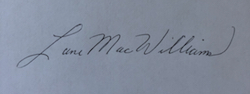
Lane MacWilliams


No comments:
Post a Comment